US

U.S. Stocks Advance as Investors Balance Inflation Risks and Labor Market Softness

U.S. stocks moved higher today (Thursday, 06.11.2026), with the Dow Jones Industrial Average rising 0.58%, the S&P 500 gaining 0.29%, and the Nasdaq advancing 0.36%, as investors weighed mixed economic data and remained optimistic about the outlook for interest rates.

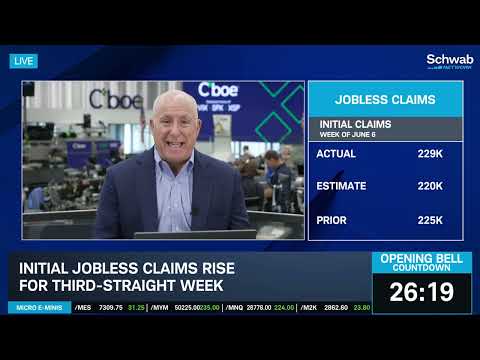
Market sentiment was supported by signs of cooling in the labor market. Initial jobless claims rose to 229,000, above expectations of 220,000, while continuing claims climbed to 1.795 million, suggesting that hiring conditions may be gradually softening. The data reinforced expectations that the Federal Reserve could still have room to ease monetary policy later this year.

However, inflation concerns remained in focus after the Producer Price Index (PPI) increased 1.1% in May, well above the 0.7% consensus forecast. The stronger-than-expected reading indicated that price pressures at the producer level remain elevated, potentially complicating the Fed's path toward lower interest rates.

Despite the inflation surprise, investors appeared encouraged by the broader trend of moderating economic growth and resilient corporate earnings. Technology shares continued to provide support for the market, while expectations that any future policy easing would benefit economic activity helped maintain positive momentum.

With major indexes trading near record highs, markets remain highly sensitive to incoming inflation and labor-market data, which will shape expectations for the Federal Reserve's next moves in the months ahead.
U.S. Producer Inflation Surprises to the Upside in May

U.S. producer prices rose more than expected in May, highlighting persistent inflation pressures at the wholesale level despite signs of cooling in parts of the economy.

The Producer Price Index (PPI) increased 1.1% month-over-month, significantly above economists’ expectations of a 0.7% rise and matching the previous month's increase of 1.1%.
U.S. jobless claims came in weaker than expected, signaling a mild softening in the labor market.

Initial jobless claims rose to 229,000, above the 220,000 forecast and higher than the previous 225,000. Continuing claims also increased to 1.795 million, exceeding expectations of 1.780 million and rising from 1.771 million.
US Markets Retreat as Sticky Inflation and Oil Supply Concerns Weigh on Sentiment

US stocks moved lower on Wednesday as investors assessed a mixed inflation report and fresh signs of tightening conditions in the oil market. The S&P 500 fell 1.03%, while the Dow Jones Industrial Average and Nasdaq Composite each declined 1.27%, reflecting a broad-based risk-off mood across Wall Street.

The day's key catalyst was the latest inflation data. Consumer prices rose 0.5% in May, matching expectations and slowing slightly from April's 0.6% increase. Annual inflation remained unchanged at 4.2%, highlighting that price pressures remain well above the Federal Reserve's 2% target.

There was some encouraging news beneath the surface. Core CPI, which excludes food and energy, increased just 0.2% during the month, below economists' expectations of 0.3% and down from 0.4% previously. However, annual core inflation held at 2.9%, suggesting that while underlying inflation is easing, progress toward price stability remains gradual.

Markets initially welcomed the softer core inflation reading, but enthusiasm faded as investors focused on the reality that headline inflation remains stubbornly high. The report reinforced expectations that the Federal Reserve will likely maintain a cautious approach toward future rate cuts, keeping borrowing costs elevated for longer than many investors had hoped earlier this year.

Energy markets added another layer of concern. US crude oil inventories fell by 7.2 million barrels last week, far exceeding expectations for a 3 million-barrel draw. The sharp decline points to strong demand and tighter supply conditions, factors that could support higher oil prices in the coming weeks.

The inventory data arrives at a time when geopolitical tensions continue to create uncertainty across global energy markets. Investors remain sensitive to any developments that could disrupt supply chains or push fuel costs higher, particularly as elevated energy prices could complicate the fight against inflation.

Technology and growth stocks, which tend to be most sensitive to interest-rate expectations, were among the weaker areas of the market as investors reassessed the likelihood of near-term monetary easing. At the same time, broader market sentiment was pressured by concerns that persistent inflation and rising energy costs could weigh on consumer spending and corporate profit margins.

With inflation still running above target and oil market fundamentals remaining tight, investors are likely to remain focused on upcoming economic releases and comments from Federal Reserve officials for further clues about the direction of monetary policy. For now, markets appear to be grappling with a familiar challenge: an economy that remains resilient enough to keep inflation elevated, but not strong enough to eliminate concerns about future growth.
US Crude Oil Inventories Fall Sharply, Supporting Oil Market Tightness

US crude oil inventories declined by 7.23 million barrels in the latest reporting week, marking a significantly larger draw than the 3.0 million-barrel decline expected by analysts. However, the decrease was slightly smaller than the previous week's 7.97 million-barrel draw.
**US Inflation Holds Firm as Core Price Pressures Ease in May**

US inflation data for May painted a mixed picture, showing that headline price pressures remain elevated while underlying inflation trends continued to moderate.

The Consumer Price Index (CPI) rose 0.5% month-over-month in May, matching expectations but slowing slightly from April’s 0.6% increase. On an annual basis, headline inflation held steady at 4.2%, in line with forecasts and unchanged from the previous month.

More encouragingly for policymakers, Core CPI—which excludes volatile food and energy prices—increased just 0.2% on a monthly basis, below the 0.3% consensus estimate and down from 0.4% in April. Annual core inflation remained at 2.9%, matching expectations and unchanged from the prior reading.
Atlanta Fed GDPNow Estimate for Q2 Rises to 3.3%, Beating Expectations

The Atlanta Federal Reserve’s closely watched GDPNow model raised its estimate for U.S. second-quarter economic growth to 3.3%, exceeding both the market consensus and the previous estimate of 3.0%.
US Stocks Extend Rally as Strong Economic Data Offsets Geopolitical Concerns

US equities traded higher on the day, with the S&P 500 rising 0.66% to 7,454.76, the Dow Jones Industrial Average gaining 0.70% to 51,139.50, and the Nasdaq advancing 0.67% to 26,104.48 as investors responded positively to a series of encouraging economic reports.

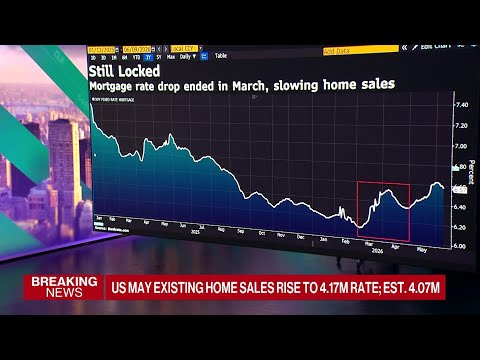
The latest macroeconomic data painted a picture of a US economy that remains resilient. Existing home sales climbed 3.2% in May to an annualized rate of 4.17 million units, comfortably beating expectations and signaling that housing demand remains healthy despite elevated mortgage rates. Earlier in the day, the US trade deficit also narrowed more than expected, providing a modest boost to growth expectations.

While the labor market showed some signs of cooling, with ADP employment growth slowing to 29,000, investors appeared to view the softer hiring data as supportive for potential Federal Reserve rate cuts later this year rather than as a sign of economic weakness.

Market sentiment was further supported by continued optimism surrounding artificial intelligence investment and strong technology-sector momentum, which has helped drive the Nasdaq to fresh highs. At the same time, investors remain closely focused on developments in the Middle East and energy markets. Although geopolitical tensions continue to create uncertainty, the absence of a major escalation has allowed risk appetite to remain intact.

Overall, today's market action reflects growing confidence that the US economy may be achieving a rare balance of moderating inflation, resilient growth, and a gradually cooling labor market—a combination that could support both corporate earnings and a more accommodative monetary policy outlook in the months ahead.
US Existing Home Sales Rebound Strongly in May, Beating Expectations

US existing home sales rose more than expected in May, signaling resilience in the housing market despite elevated mortgage rates and affordability challenges.

Sales increased to an annualized pace of 4.17 million units, surpassing economists' expectations of 4.07 million and improving from April's 4.04 million pace. On a monthly basis, existing home sales climbed 3.2%, significantly stronger than the previous month's 0.7% increase.
US Trade Deficit Narrows Slightly in April

The US trade deficit narrowed modestly in April, coming in at $55.9 billion, compared with expectations of a $56.2 billion deficit and an adjusted $56.6 billion deficit in the previous month.
Video Thumbnail
06-11-26European Investor
Video Thumbnail
06-10-26WS News
Video Thumbnail
06-10-26WS News
Video Thumbnail
06-10-26The Investor
Video Thumbnail
06-09-26Global Finance News